
Animation Timeline: Industry Growth and Shifts
Freya Thackeray · on 30 July 2026 · 7 min read · Last reviewed 30 July 2026
The animation timeline traces the evolution of vintage animation history, from early experimental films to the polished productions of today.
This journey is marked by technological breakthroughs and artistic innovation, shaping how stories are told through moving images.
- The oldest known animation, Roundhay Garden Scene (1888), is a brief clip by Louis Le Prince, predating even Thomas Edison’s work.
- In the 1930s, animation was done frame-by-frame by hand, with techniques like the rotoscope, used in Disney’s Snow White (1937) to trace over live-action footage for fluid movement.
- The old style of animation is often called traditional or cel animation, where each frame is painted on clear sheets of celluloid.
- The first animation with synchronized sound was Steamboat Willie (1928), introducing Mickey Mouse and revolutionising the industry.
What is the oldest animation in history?
The oldest surviving animation is Roundhay Garden Scene (1888), created by Louis Le Prince. This 2.11-second film, shot in Leeds, predates even the Lumière brothers’ early cinematic efforts. Though primitive by today’s standards, it laid the groundwork for future developments in animation.
According to the National Science and Media Museum, the film’s discovery in the 1930s confirmed its status as the earliest known moving picture.
How was animation done in the 1930s?
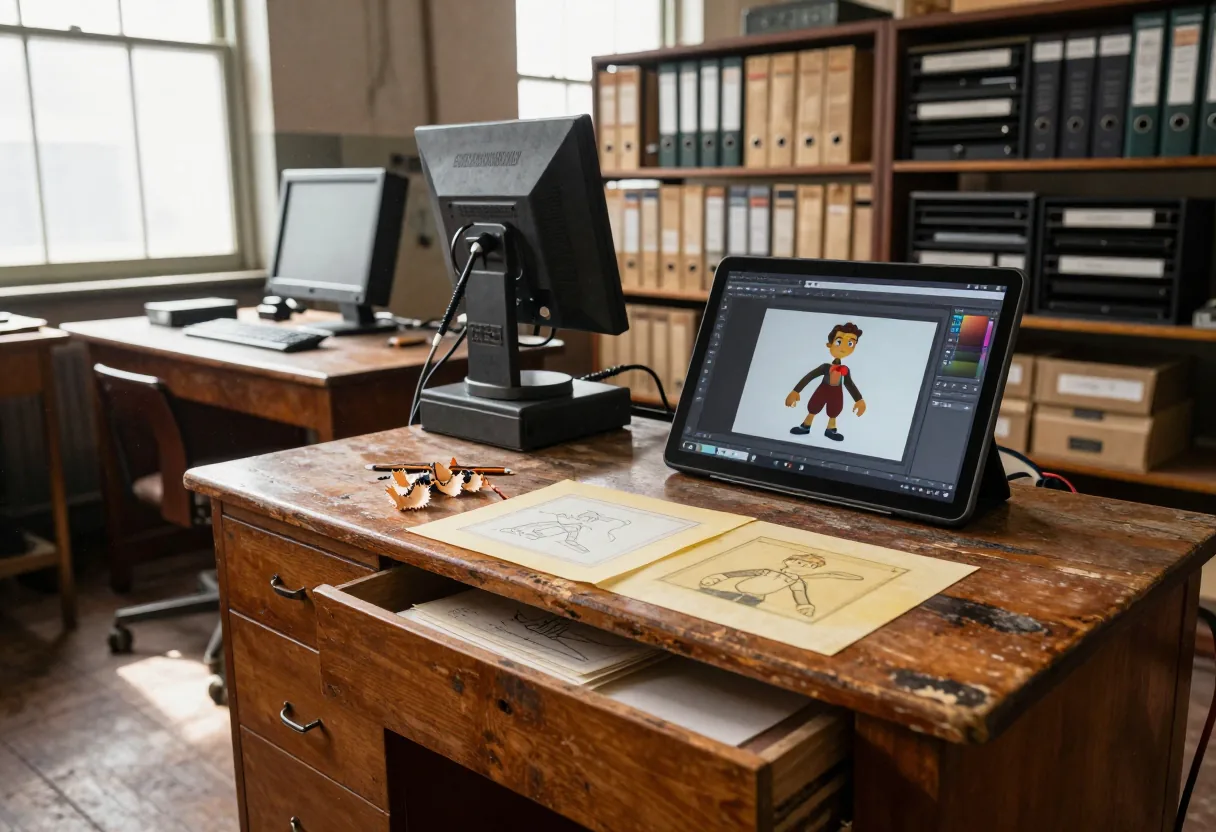
In the 1930s, animation was a meticulous, labour-intensive process. Animators worked frame-by-frame on sheets of transparent celluloid, known as cels, which were then photographed over painted backgrounds. This method, called cel animation, allowed for smooth movement and intricate details.
The rotoscope technique, pioneered by Max Fleischer and later adopted by Walt Disney, involved tracing over live-action footage to create realistic motion. Disney’s Snow White and the Seven Dwarfs (1937) famously used this technique to achieve lifelike movements for its characters. The studio employed hundreds of artists to produce the film, which took three years to complete.
What is the old style of animation called?
The old style of animation is commonly known as traditional or cel animation. This technique involves drawing each frame by hand on transparent sheets called cels, which are then layered over painted backgrounds. The cels were photographed one at a time, creating the illusion of movement when played in sequence.
Traditional animation requires a high level of skill and patience, as each frame must be carefully crafted to ensure smooth motion. The process was dominant from the early 20th century until the rise of computer-generated imagery (CGI) in the late 1990s.
What was the first animation in history?
The first animation in history is widely considered to be Roundhay Garden Scene (1888) by Louis Le Prince. This brief clip, lasting just over two seconds, depicts people walking in a garden and is the earliest known example of moving images on film. However, it was not until the late 19th and early 20th centuries that animation began to develop as an art form.
The first animated film with a narrative was Humorous Phases of Funny Faces (1906) by J. Stuart Blackton, which featured hand-drawn characters interacting in a comic scenario. This marked the beginning of animated storytelling as we know it today.
The animation timeline: key milestones
Animation history features groundbreaking moments that have shaped the industry. Here are some of the most significant milestones:
- 1888: Louis Le Prince creates Roundhay Garden Scene, the oldest known animation.
- 1906: J. Stuart Blackton releases Humorous Phases of Funny Faces, the first animated film with a narrative.
- 1928: Walt Disney introduces Mickey Mouse in Steamboat Willie, the first animated film with synchronized sound.
- 1937: Disney’s Snow White and the Seven Dwarfs becomes the first full-length animated feature film.
- 1950s-1960s: The rise of television leads to the production of animated series like The Flintstones and Scooby-Doo.
- 1980s-1990s: The advent of CGI brings new possibilities, with films like Toy Story (1995) pioneering computer-generated animation.
The Golden Age of Disney
Disney’s Golden Age, spanning from 1928 to 1967, was a period of unprecedented innovation and creativity. Walt Disney Productions produced a series of groundbreaking animated films that set new standards for the industry. The era began with the introduction of Mickey Mouse in Steamboat Willie (1928), which was the first animated film with synchronized sound.
The studio’s first full-length animated feature, Snow White and the Seven Dwarfs (1937), was a massive success and paved the way for future productions. During this period, Disney also introduced iconic characters like Donald Duck, Goofy, and Pluto, who became staples of American pop culture.
However, the studio’s legacy continues to influence animators and storytellers around the world. The Golden Age of Disney came to a close with Walt Disney’s death in 1966. In my experience, studying the works of this era provides invaluable insights into the art and craft of animation.
Major studios and their contributions
Here’s a look at some of the most influential studios and their contributions: The animation industry has been shaped by several major studios, each contributing unique techniques and styles.
| Studio | Key Contributions | Notable Works |
|---|---|---|
| Walt Disney Productions | Pioneered synchronized sound, full-length animated features, and the rotoscope technique. | Snow White and the Seven Dwarfs, Cinderella, The Lion King |
| Fleischer Studios | Developed the rotoscope technique, introduced the character of Popeye the Sailor. | Popeye the Sailor, Superman (cartoon series) |
| Warner Bros. Animation | Known for its slapstick humour and iconic characters like Bugs Bunny and Daffy Duck. | Looney Tunes, Merrie Melodies |
| Hanna-Barbera | Popularised limited animation techniques, created iconic TV series like The Flintstones and Scooby-Doo. | The Flintstones, Scooby-Doo, Where Are You!, Tom and Jerry |
Old classic cartoons list
Old classic cartoons have left an indelible mark on popular culture. Here are some of the most iconic and influential animated series and films from the early days of animation:
- Steamboat Willie (1928): The first animated film with synchronized sound, featuring Mickey Mouse.
- Snow White and the Seven Dwarfs (1937): Disney’s first full-length animated feature, a groundbreaking achievement in the industry.
- The Flintstones (1960-1966): The first animated series to air in primetime, created by Hanna-Barbera.
- Looney Tunes (1930-1969): A series of animated shorts featuring iconic characters like Bugs Bunny, Daffy Duck, and Porky Pig.
- Scooby-Doo, Where Are You! (1969-1970): A popular animated series created by Hanna-Barbera, featuring a talking dog and a group of mystery-solving teenagers.
Early history of animation
The early history of animation is a fascinating journey through technological innovation and artistic experimentation. The first animations were simple, often consisting of short clips that created the illusion of movement. Louis Le Prince’s Roundhay Garden Scene (1888) is considered the oldest known animation, though it was not until the late 19th and early 20th centuries that animation began to develop as an art form.
J. Stuart Blackton’s Humorous Phases of Funny Faces (1906) is widely regarded as the first animated film with a narrative. This short film featured hand-drawn characters interacting in a comic scenario, laying the groundwork for future developments in animated storytelling. The early history of animation is marked by a spirit of experimentation and creativity, as pioneers like Blackton and Le Prince explored the possibilities of this new medium.
Wartime Era of Disney
With the outbreak of World War II, Disney shifted its focus from feature films to producing animated shorts for the military. The Wartime Era of Disney, spanning from 1942 to 1945, was a period of significant change for the studio. These films were used for training, propaganda, and morale-boosting purposes.
One of the most notable works from this era is Der Fuehrer’s Face (1943), a propaganda film featuring Donald Duck. The studio also produced a series of educational films for the military, such as Victory Through Air Power (1943). Despite the challenges of the war, Disney continued to innovate and contribute to the war effort.
How to explore vintage animation history
To explore vintage animation history, start by watching classic animated films and series from different eras. This will give you a sense of how animation has evolved over time and the techniques used by animators. Visit film archives, museums, and online platforms that specialise in vintage animation, such as the Anim18 Animation Festival Overview and the Anijam UK Animation Jam Event. Reading books and articles on the history of animation can also provide valuable insights into the industry’s development.
Attend animation festivals and events, such as the Anim18 Animation Festival Overview and the Anijam UK Animation Jam Event. These events often feature screenings of classic films, panel discussions with industry experts, and workshops on traditional animation techniques. Engage with online communities and forums dedicated to vintage animation, where you can connect with fellow enthusiasts and learn from their experiences.
Takeaway
From the earliest experiments to the groundbreaking works of today, vintage animation history continues to inspire and captivate audiences. The animation timeline showcases the ingenuity and creativity of animators throughout history. By examining the milestones and key figures in this rich history, you gain a deeper appreciation for the art of animation and its enduring impact on storytelling.
Frequently asked questions
When did animation first become a commercial industry?
Animation's commercial roots trace back to the early 1900s, with pioneers like Émile Cohl and J. Stuart Blackton creating short films. Disney's 1928 "Steamboat Willie" starring Mickey Mouse marked a pivotal moment, launching animation as a viable industry. By the 1930s, studios like Fleischer and Warner Bros. joined, establishing animation as a mainstream medium.
How did television impact animation's growth in the 1960s?
Television exploded animation's reach in the 1960s. Hanna-Barbera's limited animation technique, used in shows like "The Flintstones" (1960), reduced costs and made animation accessible for weekly broadcasts. Networks like ABC and CBS invested heavily, turning animation into a staple of children's programming and expanding the industry's audience.
What role did CGI play in shifting animation in the 1990s?
CGI revolutionized animation in the 1990s. Pixar's "Toy Story" (1995) proved computer animation could compete with traditional methods, driving studios to adopt new technologies. By the late 1990s, CGI became a dominant force, with films like "Shrek" (2001) blending 3D graphics with humor, reshaping the industry's creative and technical standards.
Why has streaming increased demand for animated content recently?
Streaming platforms like Netflix and Disney+ have fueled animation's growth by investing billions in original content. In 2020, Netflix spent over a typical market rate billion on content, including animated series like "The Dragon Prince." This demand has led to more diverse projects, from adult-oriented shows to global collaborations, expanding animation's creative boundaries and audience reach.
Frequently asked questions (in practice)
What are the major eras in animation history?
Animation history is typically divided into four eras: silent (1890s-1920s), golden (1920s-1950s), television (1950s-1980s), and digital (1980s-present). Silent animation began with early experiments like Émile Cohl's Fantasmagorie (1908). The golden age saw classics like Disney's Snow White (1937). Television animation introduced limited animation techniques. Digital animation revolutionized the industry with CGI, starting with Pixar's Toy Story (1995).
Who pioneered early animation techniques?
Émile Cohl created one of the first animated films, Fantasmagorie (1908), using stop-motion. Winsor McCay's Gertie the Dinosaur (1914) showcased advanced character animation. Lotte Reiniger pioneered silhouette animation with The Adventures of Prince Achmed (1926). Disney's Steamboat Willie (1928) introduced synchronized sound. These innovators laid the groundwork for modern animation.
How did World War II impact animation?
WWII disrupted animation studios, especially in Europe. Disney produced wartime propaganda films like Der Fuehrer's Face (1943). The war accelerated technological advancements, like multiplane cameras used in Disney's The Three Caballeros (1944). Post-war, animation flourished globally, with studios like Toei Animation emerging in Japan. The conflict indirectly spurred innovation and international growth.
What technological advancements shaped digital animation?
Computer-generated imagery (CGI) began in the 1960s but gained traction in the 1980s. Pixar's RenderMan software, developed in 1988, revolutionized 3D rendering. Toy Story (1995) proved CGI's potential. Motion capture, used in films like The Polar Express (2004), enhanced realism. Software like Maya and Blender democratized animation. These tools transformed animation from hand-drawn to digital art.
See also: Animation History: From Early Experiments to Modern Era.
Related Reading
- Top 10 Best Animated Series: A Curated List
- Evolution of Cartoons: How Animation Changed Over Decades
- Anijam UK Animation Jam Event