
Software for Animation: Tools That Shaped the Industry
Declan Whitfield · on 30 July 2026 · 9 min read · Last reviewed 30 July 2026
Software for animation are digital tools designed to create, edit, and produce animated content, with roots tracing back to vintage animation history. These tools have evolved significantly from early hand-drawn techniques to modern software solutions, shaping the industry and enabling creators to bring their visions to life.
Animation software has transformed from basic drawing tools to complex platforms that support 2D, 3D, and even AI-driven animation. The progression mirrors the evolution of storytelling and technology, with each era introducing new techniques and tools that redefine what’s possible.
- The oldest known animation is Humorous Phases of Funny Faces (1906), created by J. Stuart Blackton.
- Early animators used techniques like stop-motion and hand-drawn frames on transparent cells.
- The first animated feature film was El Apóstol (1917), created by Quirino Cristiani.
- Disney’s Snow White and the Seven Dwarfs (1937) marked the first full-length animated film produced by a major studio.
The oldest animation in history
The oldest animation in history is Humorous Phases of Funny Faces (1906), created by J. Stuart Blackton. This short film used a mix of stop-motion and hand-drawn animation techniques, laying the foundation for future animation.
The film’s innovative approach combined live-action with animated sequences, showcasing Blackton’s drawings coming to life. This early experiment paved the way for the development of animation as a distinct art form.
According to the Library of Congress, Humorous Phases of Funny Faces is significant not only for its historical context but also for its technical achievements. The film’s success demonstrated the potential of animation to entertain and captivate audiences.
How was animation done in the 1930s?
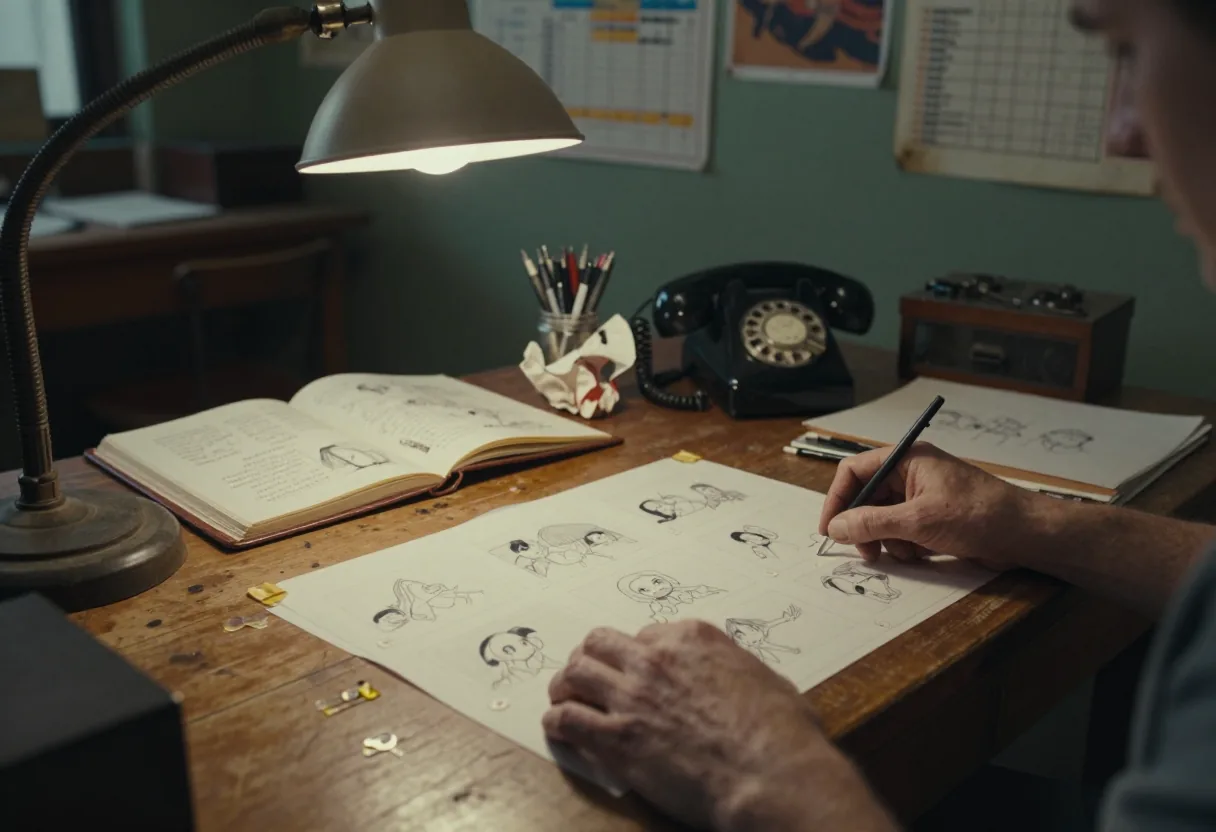
In the 1930s, animation was primarily done using hand-drawn techniques on transparent cells, known as cel animation. Animators would draw each frame on a separate cell, which would then be layered and photographed to create the illusion of movement.
Major studios like Walt Disney Productions and Fleischer Studios perfected this technique, producing iconic cartoons such as Mickey Mouse and Popeye. The process was labour-intensive, requiring teams of animators, inbetweeners, and background artists to create a single minute of animation.
During the late 1930s to the early 1960s, the Golden Age of Disney brought significant advancements in animation techniques. Disney’s Snow White and the Seven Dwarfs (1937) introduced multiplane cameras, adding depth and realism to animated scenes.
What is the old style of animation called?
Animation’s old style is called traditional or cel animation. This technique involves drawing each frame by hand on transparent sheets of celluloid, known as cels. The cels are then layered and photographed to create the illusion of movement.
Traditional animation was the dominant form of animation from the early 20th century until the rise of computer animation in the late 20th century. Iconic cartoons like Looney Tunes, Tom and Jerry, and Disney’s classic films were produced using this method.
According to Animation Websites Online Free: Resources and Archives, traditional animation requires a high level of skill and patience, as each frame must be carefully drawn and aligned. The process involves several stages, including storyboarding, animatics, and inking and painting.
What was the first animation in history?
A 1906 creation, Humorous Phases of Funny Faces, marks the first animation in history by J. Stuart Blackton. This groundbreaking film combined stop-motion and hand-drawn techniques to bring drawings to life.
Innovative approach in the film demonstrated animation’s potential to entertain and captivate audiences. Blackton’s work laid the foundation for the development of animation as a distinct art form, inspiring future animators and studios.
The film’s success paved the way for the creation of animated shorts and feature films, shaping the industry as we know it today. According to the Library of Congress, Humorous Phases of Funny Faces is a significant milestone in animation history.
History of animation timeline
Animation history stretches over a century, from early experimental films to the digital age. Key milestones include the creation of the first animated film, the development of cel animation, and the introduction of computer animation.
Early animation techniques were experimental and often combined live-action with animated sequences. The first animated film, Humorous Phases of Funny Faces (1906), set the stage for future developments in the field.
| Era | Key Developments | Notable Works |
|---|---|---|
| Early Animation (1900s-1920s) | Experimental techniques, stop-motion, hand-drawn animation | Humorous Phases of Funny Faces (1906), Gertie the Dinosaur (1914) |
| Golden Age of Animation (1930s-1960s) | Cel animation, multiplane cameras, sound synchronization | Snow White and the Seven Dwarfs (1937), Looney Tunes (1930s-1960s) |
| Modern Animation (1970s-Present) | Computer animation, CGI, 3D animation | Toy Story (1995), The Incredibles (2004) |
Old classic cartoons list
Old classic cartoons list includes iconic animated shorts and feature films that have left a lasting impact on the industry. These cartoons span various eras and techniques, showcasing the evolution of animation.
Animated shorts rose in the early 20th century, with studios like Fleischer Studios and Walt Disney Productions producing memorable characters and stories. Iconic cartoons from this era include Mickey Mouse, Popeye, and Betty Boop.
These cartoons laid the foundation for future animated series and feature films. According to Animated London: A City Captured in Motion, classic cartoons often featured simple storytelling and exaggerated animations, appealing to both children and adults.
Major studios
Major studios have played a pivotal role in shaping the animation industry, producing iconic cartoons and pushing the boundaries of animation techniques. These studios have introduced memorable characters and innovative storytelling methods.
Walt Disney Productions, founded in 1923, is one of the most influential animation studios in history. Disney’s early shorts featuring Mickey Mouse and Donald Duck set the stage for the studio’s success. In 1937, Disney released Snow White and the Seven Dwarfs, the first full-length animated feature film produced by a major studio.
Fleischer Studios, founded in 1921, was another major player in the animation industry. The studio produced popular cartoons featuring characters like Popeye and Betty Boop. Fleischer Studios’ innovative techniques, such as the use of the Rotoscope, contributed significantly to the evolution of animation.
| Studio | Founded | Notable Works |
|---|---|---|
| Walt Disney Productions | 1923 | Snow White and the Seven Dwarfs, Mickey Mouse, Donald Duck |
| Fleischer Studios | 1921 | Popeye, Betty Boop, Koko the Clown |
| Warner Bros. Animation | 1933 | Looney Tunes, Merrie Melodies, Bugs Bunny |
The Golden Age of Disney
This era saw the introduction of groundbreaking animation techniques and the production of iconic feature films. The Golden Age of Disney spanned from the late 1930s to the early 1960s, marked by a period of significant innovation and success for Walt Disney Productions.
The Golden Age began with the release of Snow White and the Seven Dwarfs (1937), the first full-length animated feature film produced by a major studio. The film’s success paved the way for future Disney classics, such as Pinocchio (1940), Fantasia (1940), and Bambi (1942).
The studio’s animators and technicians developed new techniques, such as the multiplane camera, to enhance the visual quality of their films. According to the Walt Disney Family Museum, the Golden Age of Disney was characterized by a focus on storytelling, innovation, and technical achievement.
The Wartime Era of Disney
The Wartime Era of Disney, spanning from the early 1940s to the mid-1940s, was a period of significant change for Walt Disney Productions. The studio’s focus shifted from feature films to producing educational and propaganda films for the United States government.
During this era, Disney produced films like Victory Through Air Power (1943) and The Three Caballeros (1944), which combined entertainment with educational messages. The studio also produced a series of shorts for the military, including Donald Gets Drafted (1942) and Der Fuehrer’s Face (1943).
However, this period also saw the development of new techniques and the expansion of Disney’s creative capabilities. The Wartime Era presented challenges for Disney, as the studio had to adapt to new priorities and resource constraints.
Paramount Pictures
Paramount Pictures, one of the major film studios in Hollywood, has a rich history in animation. The studio has produced and distributed numerous animated films and television series, showcasing a diverse range of styles and techniques.
Paramount Pictures entered the animation market with the acquisition of Fleischer Studios in 1942. The studio continued to produce popular cartoons featuring characters like Popeye and Betty Boop. In the 1990s, Paramount Pictures partnered with Nickelodeon to create animated series like Rugrats and SpongeBob SquarePants.
Paramount Pictures’ involvement in animation has contributed to the diversity and richness of the animation landscape. According to the Paramount Pictures Wikipedia page, the studio has also distributed animated films produced by other studios, such as The SpongeBob SquarePants Movie (2004) and Shrek (2001).
Fleischer Studios
Fleischer Studios, founded in 1921 by Max and Dave Fleischer, was a pioneering animation studio that produced iconic cartoons and innovative techniques. The studio was known for its popular characters and creative storytelling.
The studio’s innovative use of the Rotoscope, a device that traced live-action footage, allowed animators to create more realistic and fluid movements. Fleischer Studios gained fame with the introduction of Koko the Clown in 1924. This technique was later used in films like Snow White and the Seven Dwarfs.
Fleischer Studios’ creative approach and technical innovations contributed significantly to the evolution of animation. The studio produced popular cartoons featuring characters like Popeye and Betty Boop.
Beginnings
These early efforts laid the foundation for the development of animation as a distinct art form. The beginnings of animation can be traced back to the late 19th and early 20th centuries, when early filmmakers experimented with techniques to create the illusion of movement.
Stuart Blackton, combined stop-motion and hand-drawn techniques. The first animated film, Humorous Phases of Funny Faces (1906), created by J. This groundbreaking film demonstrated the potential of animation to entertain and captivate audiences.
Early animators like Émile Cohl and Winsor McCay further refined animation techniques, creating iconic works like Fantasmagorie (1908) and Gertie the Dinosaur (1914). These early pioneers explored various methods, such as stop-motion and hand-drawn animation, to bring their creations to life.
Mickey Mouse
Mickey Mouse, created by Walt Disney and Ub Iwerks in 1928, is one of the most iconic characters in animation history. The cheerful mouse made his debut in the short film Steamboat Willie, which introduced synchronized sound to animation.
Mickey Mouse’s popularity soared with the release of subsequent shorts, such as The Barn Dance (1929) and The Opry House (1929). The character’s appeal lay in his relatable personality and the innovative use of sound in animation. According to the Walt Disney Family Museum, Mickey Mouse’s success helped establish Walt Disney Productions as a leading animation studio.
Mickey Mouse has become a global symbol of animation and a beloved figure in popular culture. The character’s enduring legacy is evident in his appearances in numerous films, television series, and merchandise.
Learn more about vintage animation history and the tools that shaped the industry by visiting these links. For further exploration, check out these resources.
Frequently asked questions
Which software first introduced keyframe animation to the masses?
Autodesk Maya, released in 1998, popularized keyframe animation. Its intuitive interface and powerful tools made complex animations accessible. Before Maya, animators relied on labor-intensive methods, but Maya's keyframe system revolutionized workflows. The software's ability to manipulate objects over time set a new industry standard.
How did Adobe After Effects change the animation landscape?
Adobe After Effects, launched in 1993, democratized motion graphics. Its layer-based approach allowed animators to combine visuals, effects, and audio effortlessly. The software's real-time preview and extensive plugin support enabled rapid prototyping. After Effects became indispensable for filmmakers and advertisers, shaping modern visual storytelling.
What role did Toon Boom Harmony play in 2D animation?
Toon Boom Harmony, debuting in 2008, revitalized 2D animation. Its cut-out animation tools streamlined production, reducing time and cost. Studios like Nickelodeon and Cartoon Network adopted Harmony for its flexibility and integration with traditional animation techniques. The software's advanced rigging and lip-sync features made it a favorite among 2D animators.
Why is Blender significant for independent animators?
Blender, first released in 1998, offers a free, open-source alternative to expensive software. Its comprehensive suite of tools covers modeling, rigging, animation, simulation, rendering, compositing, and motion tracking. Blender's active community and frequent updates make it ideal for independent artists and small studios looking to create professional-quality animations without high costs.
Frequently asked questions (in practice)
What software do professionals use for 2D animation?
Professionals often use Adobe Animate for its vector-based tools and industry-standard features. Toon Boom Harmony is another favorite, especially for TV and film animation, due to its advanced rigging and cut-out animation capabilities. OpenToonz, used by Studio Ghibli, is a free option with powerful cut-out and hand-drawn animation tools.
Which software is best for 3D animation beginners?
Blender leads for beginners due to its free, open-source nature and extensive community support. Its interface is user-friendly, and it offers modeling, rigging, animation, and rendering tools. Autodesk Maya is also beginner-friendly but requires a subscription, making Blender the more accessible choice.
How does animation software handle motion capture data?
Software like MotionBuilder and Maya can import motion capture data from devices like Vicon or OptiTrack. The data is mapped onto 3D models, allowing animators to refine and adjust movements. This process saves time and ensures realistic motion, though manual tweaking is often necessary for subtle expressions and nuances.
What are the key differences between Blender and Autodesk Maya?
Blender is free and open-source, making it accessible but with fewer official support resources. Maya, a paid software, offers reliable industry-standard tools and extensive customer support. Blender’s interface is customizable and intuitive, while Maya’s is more complex but powerful. Both support Python scripting for automation.