
Adult Animated Series: Evolution and Content Guide
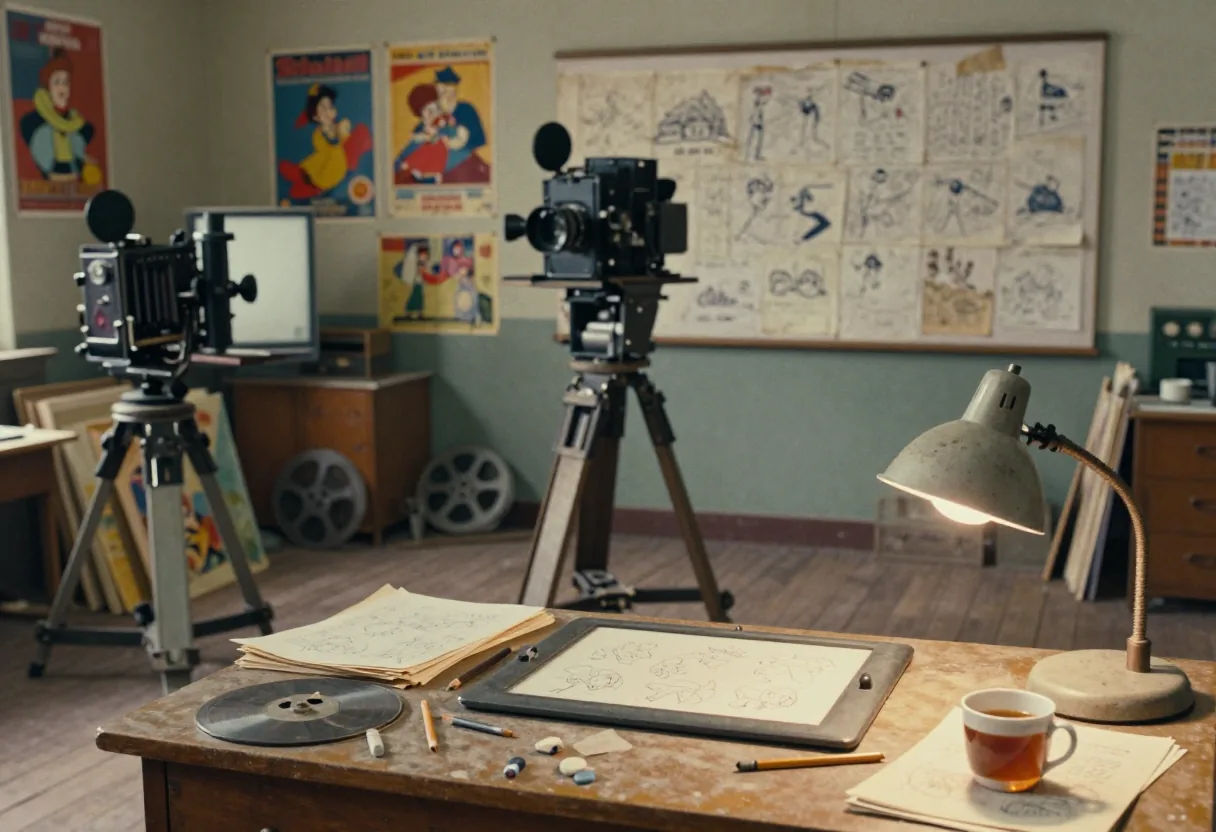
Freya Thackeray · on 30 July 2026 · 6 min read · Last reviewed 30 July 2026
Adult animated series are television programmes created using animation techniques and designed primarily for mature audiences, examining complex themes beyond typical children’s cartoons.
These shows often blend sophisticated humour, social commentary, and intricate storytelling, pushing the boundaries of what animation can achieve.
- The oldest known animated feature is El Apóstol, a 1917 Argentine political satire by Quirino Cristiani, though only stills survive.
- In the 1930s, animators like Walt Disney and Ub Iwerks pioneered techniques such as the multiplane camera, which added depth to animations.
- The traditional hand-drawn animation style, now often called “classic” or “old-style” animation, dominated until the digital era.
- The first widely recognised animated short, Humorous Phases of Funny Faces (1906) by J. Stuart Blackton, used stop-motion and hand-drawn techniques.
What defines adult animated series as different from children’s cartoons?
Adult animated series distinguish themselves through mature themes, complex narratives, and targeted marketing towards older demographics.
Unlike children’s cartoons, which often prioritise simplicity and moral lessons, adult animations focus on satire, darker humour, and intricate plotlines. Shows like The Simpsons and Family Guy exemplify this shift, tackling subjects from politics to existential dilemmas.
| Characteristic | Children’s Cartoons | Adult Animated Series |
|---|---|---|
| Primary Audience | Children (ages 2-12) | Teens and adults (ages 13+) |
| Themes | Moral lessons, friendship, adventure | Satire, social commentary, dark humour |
| Humor | Slapstick, simple jokes | Witty, ironic, often risqué |
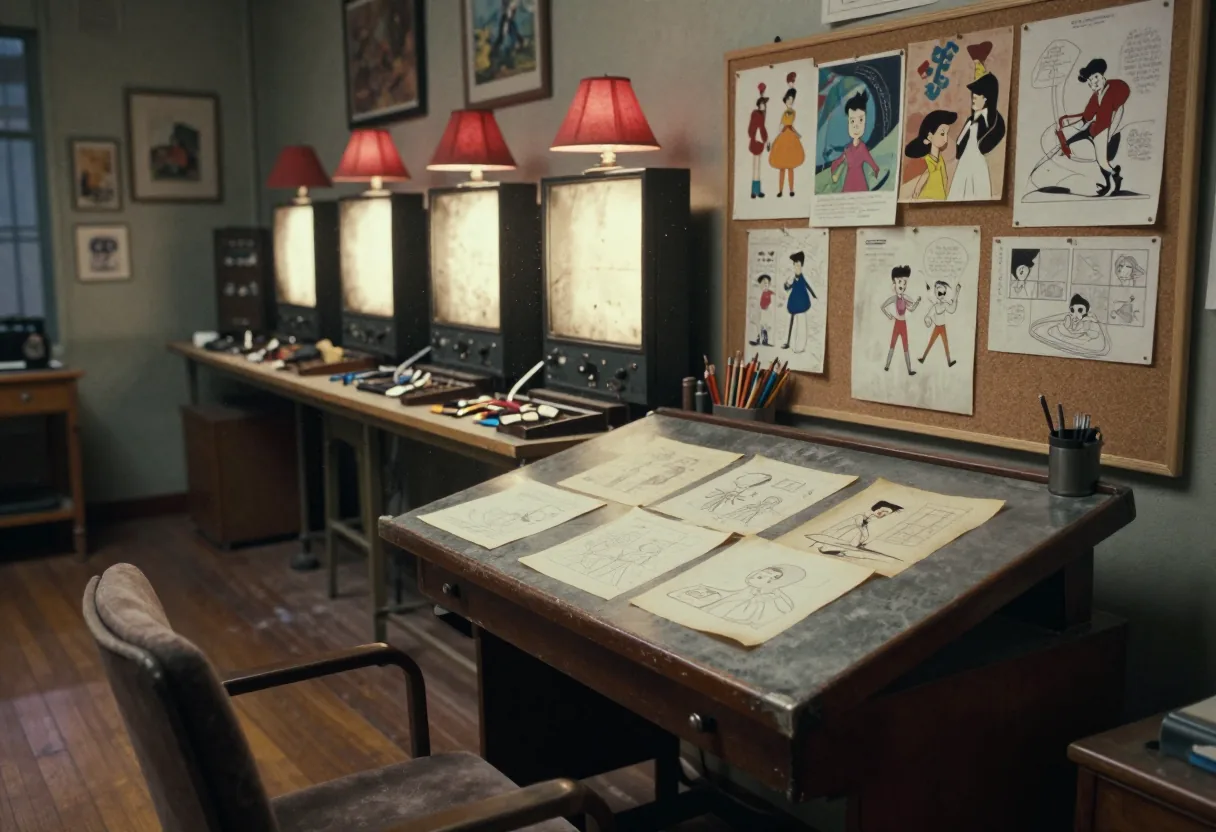
How did animation techniques evolve in the 1930s?
In the 1930s, animation techniques advanced significantly, with studios experimenting with colour, sound, and depth.
The introduction of Technicolor in 1932 revolutionised the industry, as seen in Disney’s Flowers and Trees, the first animated short to use the process. Sound synchronization also improved, allowing for more dynamic storytelling. The multiplane camera, invented by William Garity and perfected by Disney, added a three-dimensional effect to animations, most notably in Snow White and the Seven Dwarfs (1937).
According to the Academy of Motion Picture Arts and Sciences, the 1930s saw the birth of the “Golden Age of Animation,” with studios like Warner Bros. and Fleischer Studios contributing to the innovation. The use of rubber hose animation, where characters’ limbs were drawn as simple, bendable cylinders, became a hallmark of the era.
What is the old style of animation called, and why is it significant?
The old style of animation is commonly referred to as “traditional” or “hand-drawn” animation.
This technique involves animators drawing each frame by hand on transparent sheets called cels. The significance of traditional animation lies in its foundational role in the industry. It was the dominant form of animation from the early 20th century until the advent of computer animation in the late 1990s. Classic examples include Disney’s Snow White and the Seven Dwarfs and Warner Bros.’ Looney Tunes series.
The vintage animation history timeline: Key milestones
Animation’s history is marked by several key milestones that shaped the industry.
- 1906: J. Stuart Blackton releases Humorous Phases of Funny Faces, the first known animated short.
- 1917: Quirino Cristiani directs El Apóstol, the first animated feature film.
- 1928: Walt Disney releases Steamboat Willie, introducing Mickey Mouse and synchronized sound.
- 1937: Disney’s Snow White and the Seven Dwarfs becomes the first full-length animated feature.
How did major studios contribute to the Golden Age of animation?
Major studios like Walt Disney Productions, Warner Bros., and Fleischer Studios played pivotal roles in advancing animation during the Golden Age.
Walt Disney Productions set the standard with technological innovations and narrative sophistication. The studio’s use of Technicolor and the multiplane camera created a visual richness that captivated audiences. Warner Bros., through its Looney Tunes and Merrie Melodies series, introduced iconic characters like Bugs Bunny and Daffy Duck, known for their wit and anarchic humour. Fleischer Studios, creators of Popeye and Betty Boop, pushed boundaries with adult themes and risqué content, especially in the 1930s.
| Studio | Key Contributions | Notable Works |
|---|---|---|
| Walt Disney Productions | Technicolor, multiplane camera, narrative sophistication | Snow White and the Seven Dwarfs, Fantasia |
| Warner Bros. | Synchronized sound, iconic characters | Looney Tunes, Merrie Melodies |
| Fleischer Studios | Adult themes, risqué content | Popeye, Betty Boop |
What role did Paramount Pictures and Fleischer Studios play in vintage animation?
Paramount Pictures and Fleischer Studios were instrumental in shaping early animation, particularly through their collaboration.
Paramount distributed Fleischer Studios’ animated shorts, which often featured adult humour and social commentary. Fleischer’s Koko the Clown series and Popeye cartoons became iconic, blending slapstick with more mature themes. The studios’ use of the Rotoscope, a device that traced live-action footage to create more realistic animations, was a significant technical advancement.
In my experience, the collaboration between Paramount and Fleischer Studios highlighted the potential for animation to appeal to both children and adults, setting a precedent for future adult animated series.
How did the Golden Age of Disney influence vintage animation history?
Disney’s Golden Age, roughly spanning the 1930s to the early 1960s, was a period of unparalleled innovation and creativity in animation.
During this era, Walt Disney Productions introduced groundbreaking techniques such as the multiplane camera and Technicolor, which enhanced the visual depth and richness of animations. The studio’s focus on narrative sophistication and character development raised the bar for storytelling in animation. Iconic works like Snow White and the Seven Dwarfs and Fantasia not only entertained audiences but also inspired future generations of animators.
According to the Characters from The Simpsons: A Cultural Phenomenon, the Golden Age of Disney laid the foundation for modern animation, influencing both artistic and technical aspects of the medium.
What were the major themes and styles of adult animated series in the 2000s?
Adult animated series surged in the 2000s, looking at diverse themes and styles for mature audiences.
Shows like Family Guy and South Park pushed the boundaries of humour and social commentary, often addressing controversial topics with satire and irreverence. The Simpsons continued to evolve, blending family dynamics with sharp wit and cultural critique. The decade also saw the rise of anthology series like Adult Swim‘s Metalocalypse, which explored niche interests like heavy metal music.
Cartoons in the 2000s’ Golden Age experimented with storytelling and animation styles, reflecting diverse adult viewer interests.
What are some notable old classic cartoons from the Golden Age?
Several classic cartoons from the Golden Age remain iconic and influential.
Walt Disney’s Snow White and the Seven Dwarfs (1937) is often cited as a landmark achievement, combining technological innovation with timeless storytelling. Warner Bros.’ Looney Tunes series, featuring characters like Bugs Bunny and Porky Pig, showcased a blend of slapstick and witty humour. Fleischer Studios’ Popeye cartoons, known for their energetic animation and adult themes, also left a lasting impact.
These cartoons not only entertained audiences but also set the stage for future generations of animators to explore new creative possibilities.
To explore more about the evolution of animation, check out our guide on Animated Comedy: From Vaudeville to Modern Hits.
How did wartime influence Disney’s animation during the 1940s?
During the 1940s, the wartime era significantly altered Disney’s studio focus and output.
With many animators drafted into the military, Disney shifted its attention to producing propaganda films and training videos for the government. Films like Victory Through Air Power (1943) and The Three Caballeros (1944) reflected the studio’s efforts to support the war. The financial strain and loss of talent during this period forced Disney to downsize and innovate, leading to the creation of package films like Make Mine Music and Fun and Fancy Free, which combined shorter stories to fill feature-length runtime.
The wartime era challenged Disney to adapt and diversify its storytelling, ultimately contributing to the studio’s resilience and creativity.
For more insights into the history of animation, visit our article on Animated GIF Video: History and Cultural Impact.
Animated series for adults keep developing, mirroring the shifting preferences and concerns of grown-up viewers. Via satirical comedy, intricate plots, or creative animation styles, these programs provide a diverse range of storytelling that attracts audiences of all ages.
Frequently asked questions
Quick answers to the common adult animated questions.
How have adult animated series evolved since their inception?
Adult animated series began with shows like *The Flintstones* in 1960, offering family-friendly humor. The 1990s saw a shift with *The Simpsons* and *South Park*, pushing boundaries with satire and mature themes. Modern series like *BoJack Horseman* and *Rick and Morty* tackle complex issues, blending dark comedy with deep character studies.
What themes are commonly explored in adult animated series?
These series often address social satire, political commentary, and existential questions. *Archer* combines espionage with dark humor, while *F is for Family* explores family dynamics. *Big Mouth* delves into adolescence, and *Arcane* offers a mature take on video game lore.
Which adult animated series have received critical acclaim?
Shows like *The Simpsons* (Emmy-winning) and *BoJack Horseman* (Praise for mental health portrayals) stand out. *Rick and Morty* gained a cult following for its sci-fi absurdity. *Arcane* received widespread acclaim for its animation and storytelling, winning multiple Annie Awards.
How do adult animated series differ from live-action counterparts?
Animation allows for exaggerated visuals and surreal humor, as seen in *Rick and Morty*. It also enables exploration of complex themes with stylized storytelling, like *BoJack Horseman*'s depiction of depression. Live-action series often rely on realism, while animation embraces creativity.
Frequently asked questions (in practice)
Quick answers to the common adult animated questions.
What defines adult animation as distinct from children's animation?
Adult animation targets mature audiences with complex themes, risqué humor, and sophisticated storytelling. Shows like *Rick and Morty* or *BoJack Horseman* tackle issues such as existentialism, mental health, and social satire, often using darker humor and graphic content that wouldn't fit in children's cartoons.
How has the popularity of adult animation grown in recent years?
Streaming platforms like Netflix and HBO Max have significantly expanded the reach of adult animation. Series such as *Archer* and *Big Mouth* have found larger audiences, while awards recognition—like *The Simpsons* winning 34 Emmys—has further legitimized the genre.
Which adult animated series has the highest-rated episode on IMDb?
The *Futurama* episode *The Devil's Hands Are Idle Playthings* holds a 9.7 rating on IMDb. It features Phil Hendrie as the Devil and explores themes of temptation and creativity, blending dark comedy with philosophical depth.
What role do independent creators play in adult animation?
Independent creators often push boundaries with original content. YouTube channels like *The Fungies!* and *Too Many Cooks* (Adult Swim) showcase experimental humor and animation styles, influencing mainstream productions and fostering niche audiences.
Related Reading
- Top 10 Best Animated Series: A Curated List
- Best Animated TV Shows: Ratings and Cultural Impact
- Animated Comedy: From Vaudeville to Modern Hits
- Characters from The Simpsons: A Cultural Phenomenon
- Animated GIF Video: History and Cultural Impact
See also: Classic 80s Cartoons: Defining a Generation.