
Explainer Animated Video: How Motion Graphics Educate
Declan Whitfield · on 30 July 2026 · 9 min read · Last reviewed 30 July 2026
An explainer animated video is a short, engaging motion graphics piece designed to simplify complex ideas, educate audiences, or promote products and services. These videos leverage vintage animation history techniques and modern design to create memorable, instructive content.
At its core, an explainer animated video transforms abstract concepts into visual narratives, making them accessible and entertaining. The format has evolved from hand-drawn frames to digital motion graphics, but the goal remains the same: to educate and engage.
- The earliest known animation is Humorous Phases of Funny Faces (1906), created by J. Stuart Blackton, featuring hand-drawn faces on a chalkboard.
- Traditional animation in the 1930s relied on cel animation, where each frame was hand-drawn on transparent sheets called cels.
- The old style of animation is often referred to as traditional or hand-drawn animation, exemplified by early Disney films.
- The first animation in history is debated, but Fantasmagorie (1908) by Émile Cohl is often cited as the earliest fully animated film.
What is the oldest animation in history?
The oldest animation in history is widely considered to be Humorous Phases of Funny Faces (1906), directed by J. Stuart Blackton. This short film features a sequence of hand-drawn faces on a chalkboard, animated frame by frame. Another contender for the title is Fantasmagorie (1908) by Émile Cohl, which is often cited as the first fully animated film.
These early works laid the foundation for the animation techniques used today in explainer animated videos. The first time I really looked at these films, I was struck by how crude yet innovative they were, setting the stage for the evolution of animation.
How was animation done in the 1930s?
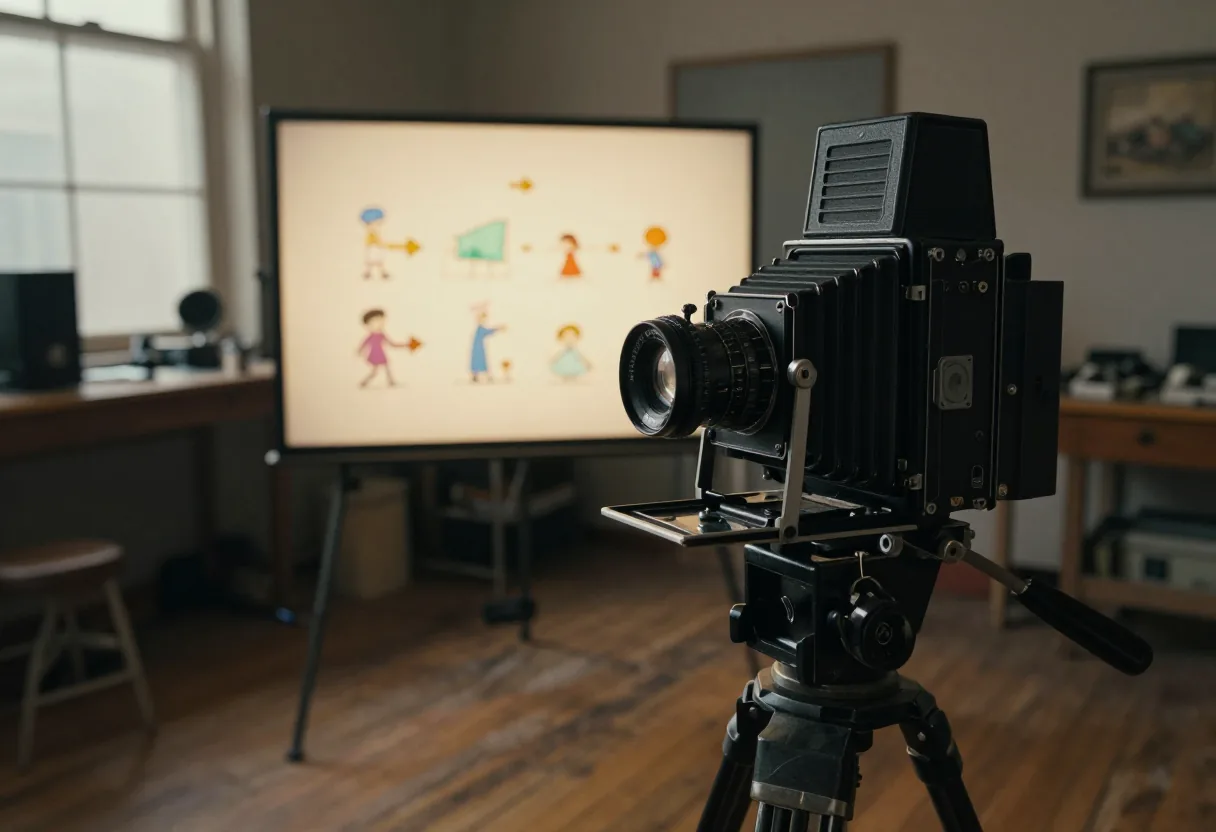
In the 1930s, animation was primarily done using cel animation, a technique developed by Earl Hurd in 1914. Animators would draw each frame on transparent sheets called cels, which were then layered over a static background. This method allowed for smoother and more detailed animations compared to earlier techniques.
Major studios like Walt Disney Productions and Fleischer Studios refined cel animation, creating iconic cartoons such as Snow White and the Seven Dwarfs (1937) and Popeye the Sailor (1933). These films showcased the potential of animation as a storytelling medium, paving the way for modern explainer animated videos.
What is the old style of animation called?
The old style of animation is known as traditional or hand-drawn animation. This technique involves drawing each frame by hand on paper or cels, which are then photographed and played in sequence to create the illusion of motion. Traditional animation was the dominant form of animation from the early 20th century until the rise of computer animation in the late 20th century.
Early Disney films like Steamboat Willie (1928), featuring Mickey Mouse, and classic cartoons from the Golden Age of American animation, such as Looney Tunes and Merry Melodies, showcase the skill and creativity of animators from that time.
Vintage animation history timeline
Vintage animation history spans over a century, marked by significant milestones and technological advancements. Here is a brief timeline of key events in the history of animation:
| Year | Event | Significance |
|---|---|---|
| 1906 | Humorous Phases of Funny Faces | First known animation featuring hand-drawn faces on a chalkboard. |
| 1908 | Fantasmagorie | First fully animated film, showcasing basic animation principles. |
| 1928 | Steamboat Willie | Introduction of synchronized sound in animation with Mickey Mouse. |
| 1937 | Snow White and the Seven Dwarfs | First full-length animated feature film, revolutionizing the industry. |
| 1995 | Toy Story | First fully computer-animated feature film, marking the shift to digital animation. |
History of animation timeline
Animation’s history is rich with innovation and creativity. Here are some key moments that shaped the evolution of animation:
- 1906: Humorous Phases of Funny Faces by J. Stuart Blackton.
- 1908: Fantasmagorie by Émile Cohl.
- 1928: Steamboat Willie by Walt Disney.
- 1937: Snow White and the Seven Dwarfs by Walt Disney Productions.
- 1995: Toy Story by Pixar Animation Studios.
These milestones highlight the progression from simple hand-drawn animations to sophisticated computer-generated imagery (CGI), which is now used in modern explainer animated videos.
Vintage animation history facts
Vintage animation history is filled with fascinating facts and trivia. For instance, the first animated film with synchronized sound was Steamboat Willie (1928), featuring Mickey Mouse. This innovation revolutionized the animation industry, paving the way for future sound-driven animations.
Another interesting fact is that the Golden Age of American animation, which spanned from the 1920s to the 1960s, was dominated by major studios like Walt Disney Productions, Warner Bros., and Fleischer Studios. These studios produced iconic cartoons that continue to influence animation today.
Old classic cartoons list
Old classic cartoons have left an indelible mark on the history of animation. Some of the most notable examples include Steamboat Willie (1928), Snow White and the Seven Dwarfs (1937), Popeye the Sailor (1933), and Looney Tunes (1930). These cartoons showcased the creativity and skill of early animators, setting the stage for modern animation techniques.
Those keen on the history of animation will find plenty of resources and exhibitions featuring classic animation at the Anim18 Animation Festival.
Early history of animation
Animation’s early history is marked by experimentation and innovation. Early animators like J. Stuart Blackton and Émile Cohl pioneered techniques that would later become standard in the industry. For example, Blackton’s Humorous Phases of Funny Faces (1906) featured hand-drawn faces on a chalkboard, while Cohl’s Fantasmagorie (1908) showcased basic animation principles.
Cel animation allowed for smoother and more detailed animations, enabling animators to create complex and engaging stories. These early works laid the foundation for the development of cel animation, which became the dominant form of animation in the early 20th century.
Golden age of cartoons 2000s
Cartoons in the 2000s experienced a Golden Age, reviving vintage animation techniques with modern technology. This era produced a new wave of animated series and films that appealed to both children and adults. Notable examples include Avatar: The Last Airbender (2005) and Adventure Time (2010), which blended traditional animation with digital techniques.
Streaming platforms like Netflix rose to prominence during the 2000s, making animated content more accessible to global audiences. This increased visibility has helped preserve and promote the rich history of animation.
Major studios
Major studios have played a crucial role in the development and popularization of animation. Walt Disney Productions, for instance, pioneered the use of cel animation and produced iconic films like Snow White and the Seven Dwarfs (1937). Similarly, Fleischer Studios, known for their Popeye cartoons, contributed significantly to the Golden Age of American animation.
In the modern era, studios like Pixar Animation Studios and DreamWorks Animation continue to push the boundaries of animation, creating visually stunning and narratively rich films. These studios have also embraced digital animation techniques, which have become standard in the industry.
Walt Disney Productions
Walt Disney Productions is one of the most influential studios in the history of animation. Founded by Walt Disney and his brother Roy O. Disney in 1923, the studio produced some of the most iconic animated films and characters of all time. Notable works include Steamboat Willie (1928), featuring Mickey Mouse, and Snow White and the Seven Dwarfs (1937), the first full-length animated feature film.
Disney’s contributions to the animation industry are immense, and its legacy continues to inspire new generations of animators. For more information on Walt Disney Productions, visit the Walt Disney Company Wikipedia page.
Beginnings
Animation began in the late 19th and early 20th centuries, when pioneers like J. Stuart Blackton and Émile Cohl experimented with new techniques to create the illusion of motion. These early animators laid the groundwork for the development of cel animation, which became the dominant form of animation in the early 20th century.
However, they showcased the potential of animation as a storytelling medium and paved the way for future innovations. The first animated films, such as Humorous Phases of Funny Faces (1906) and Fantasmagorie (1908), were simple and crude by today’s standards.
Mickey Mouse
Mickey Mouse is one of the most iconic characters in the history of animation. Created by Walt Disney and Ub Iwerks in 1928, Mickey made his debut in Steamboat Willie, the first animated film with synchronized sound. This innovation revolutionized the animation industry and helped establish Disney as a leading studio.
Mickey Mouse has since become a global symbol of animation and a beloved character in countless films, television shows, and merchandise. His enduring popularity shows the creativity and skill of the animators who brought him to life.
How to create an explainer animated video
To create an explainer animated video, follow these steps:
- Define your message and target audience.
- Write a script that is clear, concise, and engaging.
- Storyboard your video to plan the visual sequence.
- Create or source the necessary assets, such as characters, backgrounds, and props.
- Animate the assets using software like Adobe After Effects or Toon Boom.
- Add sound effects, music, and voice-over to enhance the video.
- Review and refine the video to ensure it meets your goals and resonates with your audience.
Entry-level videos may be more affordable, while premium productions can be significantly more expensive. The cost of creating an explainer animated video can vary widely depending on factors such as complexity, length, and production quality. In my experience, investing in high-quality animation and clear storytelling can greatly enhance the effectiveness of your video.
Best practices for explainer animated videos
When creating an explainer animated video, it’s essential to follow best practices to ensure its effectiveness. Keep the video concise, typically between 60 and 90 seconds, to maintain viewer engagement. Focus on a single message or idea, and use simple, clear language to convey your points.
Incorporate visual elements that support your message, such as icons, graphs, and animations, to make the content more engaging and easier to understand. Use a consistent style and color scheme to create a cohesive look and feel. Additionally, consider your target audience and tailor the video’s tone and content to resonate with them.
For inspiration and guidance, explore the best animated TV shows and top 10 best animated series, which showcase the power of animation in storytelling.
The future of explainer animated videos
As animation software becomes more accessible and powerful, creators can produce high-quality videos more efficiently. The future of explainer animated videos is bright, with advancements in technology and increasing demand for engaging educational content. Additionally, the rise of virtual reality (VR) and augmented reality (AR) presents new opportunities for immersive and interactive explainer videos.
In the coming years, we can expect to see more innovative uses of animation in education, marketing, and entertainment. The key to success will be staying up-to-date with the latest trends and technologies, and continuously refining your skills and techniques.
For those aiming to enter the animation industry, examining animation jobs and entry-level animator jobs can offer useful information and prospects.
Keep an eye on the latest developments in the animation world by attending events like the Anijam UK Animation Jam Event, which brings together animators and enthusiasts to showcase their work and share ideas.
Frequently asked questions
Why are animated explainer videos effective for education?
Animated explainer videos combine visuals and audio to simplify complex ideas. Motion graphics break down processes into digestible steps. For example, a video explaining the water cycle can show droplets transforming into clouds, making abstract concepts tangible. This dual sensory approach boosts retention and engagement.
How do motion graphics enhance learning outcomes?
Motion graphics use visual metaphors and dynamic transitions to illustrate relationships between concepts. For instance, a video on photosynthesis might animate sunlight particles hitting leaves, showing energy conversion. Such visuals cater to different learning styles, ensuring clarity and reinforcing understanding.
What makes motion graphics better than static images for education?
Static images can only show one moment in time. Motion graphics, however, depict changes over time. A video explaining the solar system’s orbits uses moving planets to show their paths, making the concept more intuitive. This dynamic quality captures attention and clarifies motion-based phenomena.
Can animated explainer videos be used for complex subjects like science or medicine?
Absolutely. These videos excel at simplifying intricate subjects. For example, a video on the human circulatory system can animate blood flow through veins and arteries, making the process vivid. By visualizing unseen processes, motion graphics demystify complex topics, aiding comprehension.
Frequently asked questions (in practice)
What defines an explainer animated video?
A concise, engaging video using animation to simplify complex ideas. Typically 60-90 seconds, it combines visuals, voiceover, and minimal text to explain a product, service, or concept. Think of it as a visual metaphor making abstract ideas tangible, like a startup’s business model or a new app’s functionality.
Why choose animation over live-action?
Animation offers flexibility. It can depict abstract concepts, future products, or any scenario without physical constraints. Live-action requires props, locations, and actors. Animation also scales well globally, as visuals transcend language barriers. Plus, it’s often cheaper and faster for complex topics.
How do you measure the success of an explainer video?
Track metrics like view duration, conversion rates, and engagement (shares, comments). A high retention rate (e.g., 70%+ viewers watching to the end) signals strong content. For sales-focused videos, monitor sign-ups or purchases. A/B testing helps compare performance against other formats.
What’s the typical process for creating one?
Start with a script, focusing on clear messaging. Storyboards visualize the script. Voiceover recording follows, then animation. Feedback loops refine the draft. Finally, music and sound effects are added. The best videos balance simplicity with creativity—no fluff, just clarity and impact.
Related Reading
- Top 10 Best Animated Series: A Curated List
- Best Animated TV Shows: Ratings and Cultural Impact
- Entry Level Animator Jobs: How to Break In
- Animation Timeline: Industry Growth and Shifts
- Anijam UK Animation Jam Event